A team lead writes in and asks about a brand transformation. On the call, the room fills with three different pictures of what that means. Somebody imagines a new visual identity. Somebody else imagines the positioning being rewritten from the top. A third person imagines the whole company changing what it sells and who it sells to. All three are called the same thing. Only one of them is the project that actually needs to happen.
Every real transformation begins with that sorting. If the wrong one gets scoped, the money still moves, the deliverables still ship, and the brand still looks new in the deck. And six months later the team is in the same room asking the same questions, because the layer that was drifting never got touched.
The three things people mean when they say transformation
The first is a visual refresh. A new logo, a new palette, tighter typography. It is the fastest to sell and the fastest to install. It is also the one that fails most often, because when the problem underneath is strategic, dressing the surface changes nothing about how the team makes decisions on Monday morning.
The second is a positioning rewrite. What the brand stands for, who it serves, and what it offers that a competitor could not offer in its place. This is the layer that usually needs the work when a business has grown past its original story. The team feels the drift as a series of small symptoms, and the diagnostic keeps coming back to the same place: the position was set for a smaller version of the company, and it does not hold at the current size.
The third is a re-founding. A change to what the business does, who it does it for, or how it makes money. Sometimes the brand transformation is the visible surface of a change that has already happened commercially and needs to be admitted publicly. Sometimes it precedes a commercial change the leadership has committed to but not yet shipped. Either way, the visual work follows the strategic work, and the strategic work follows a decision that lives with the board.
The one you cannot afford to skip
In our experience, most inbound conversations begin at surface one and belong at surface two. The team names the visual problem because the visual problem is the one everyone sees. The real work sits underneath.
That is why every serious transformation opens with a diagnostic before any visual direction is drawn. We look at what the brand has been trying to say, what the audience has been receiving, and where the two stopped matching. We look at how the team makes brand decisions today, which decisions the founder still holds because nobody else can, and where consistency is being maintained by memory rather than by a system. The diagnostic is the difference between fixing what a client named and fixing what a client needed.
What actually changes
A real transformation touches four layers, and each one is calibrated to the diagnostic. The positioning states why the brand exists, who it is for, and what it offers that no competitor could offer in its place. The messaging architecture is the hierarchy of statements that carries the position across every context the team writes into, from the homepage to the deck to the founder's LinkedIn. The visual identity is the design system that makes the brand recognizable at every touchpoint, calibrated to the positioning rather than to a mood board. The implementation plan is the operating layer that lets the team run the brand without routing every decision through one person's desk.
None of these are documents. All four of them are systems. That distinction is where most rebrands break, because a document sits in a drive and a system sits in the way the team works. It is why we open a rebrand by finding what is still true, then rebuilding the expression around it.
Why it does not stick when it stays surface
The pattern we hear most often is that the last agency delivered files. Beautiful files. A brand book that reads well and a logo the team is proud of. But the strategic layer was assumed rather than built, the implementation layer was skipped entirely, and inside six months the team is asking on Slack whether a new microsite counts as on brand. Nobody can answer with confidence because there is no source of truth that ties the visuals back to the strategy.
Files without a system behind them are decorative. They look professional in the shared drive. They do not change how the team makes decisions, and that is the layer a transformation has to reach if it is going to hold.
What we did for Atelier Talule
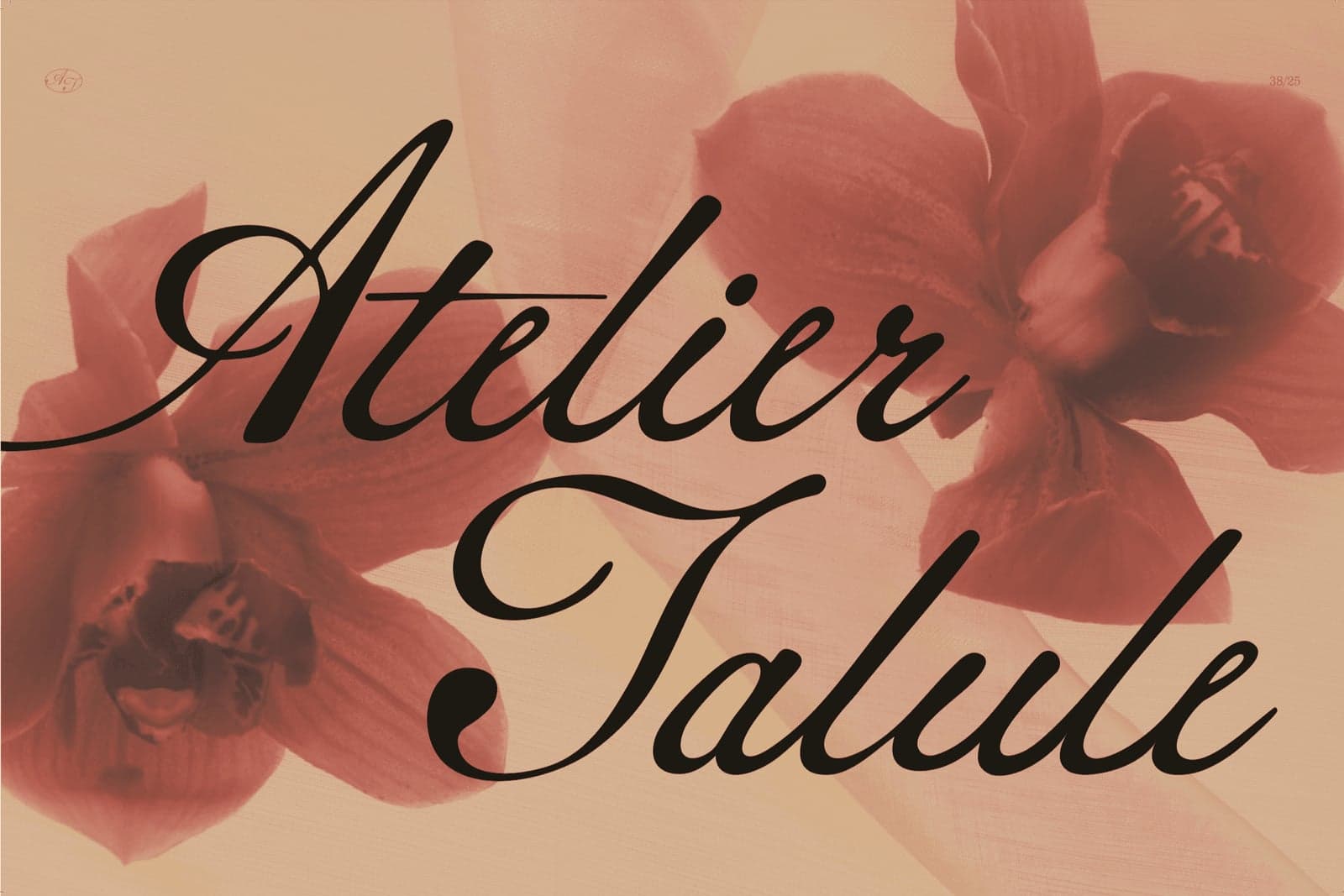
The first thing we resolved at Atelier Talule was not a visual question. It was an architectural one. Three generations of jewelry craft had tangled into a single presentation, and nobody could see which entity needed to stand alone and which needed to share a foundation. Before any design work started, we separated the two entities, wrote the position each one had to hold, and built the messaging that ran across both. The visual identity followed the strategy. The first pieces of work under the new rules were produced by the same team that wrote them, so nothing was lost in the translation between what the brand meant and how it looked.
The transformation moved a family archive into a brand that could carry a national conversation. That is what a real transformation buys, and it is not a folder. It is a foundation the team can build on.
What this costs and what it protects
The cost of a full transformation reflects the scope: strategic diagnostic, positioning, messaging architecture, visual identity, first proof under the new rules, and the implementation plan that keeps the work honest after we leave. Every one of those layers is billable because every one of them protects the investment in the others. Skip the plan and the identity drifts. Skip the strategy and the identity has nothing to test against. What you pay for is the coherence between the layers, and the coherence is the product.
The number that decides whether this is worth it is not the price of the project. It is the cost of doing the wrong project and having to do it again in eighteen months. A full brand transformation is priced against that number, not against the last quote.
If the picture we described sounds like where the brand is, that is where the conversation starts.