When a brand and marketing leader books time with us, the request usually arrives with the answer already picked. The brand needs a rebrand, the budget is coming together, and the call is about scope and timing. Halfway through the meeting it is clear nobody has said what is actually broken.
Two definitions circulate in the industry, and both are correct. A brand refresh modernises the look and keeps the identity intact. A rebrand is a complete repositioning: new mission, new audience, new identity. Both are accurate, and both are why teams keep buying the wrong project.
What a brand refresh actually is
A brand refresh modernises the look without changing who the brand is. The logo gets simplified so it renders on mobile the way it was drawn for print. The typography and palette get a modern update, the tone is sharpened, and the core identity stays intact.
Mastercard's 2016 refresh is the case people cite most often. Same interlocking circles, simplified for mobile screens the mark was never drawn for. Starbucks did the same in 2011: dropped the wordmark, kept the siren, streamlined the whole system. In both cases the positioning did not move and the audience did not move. What moved is the surface.
The test is simple. After a refresh, the brand makes the same argument to the same reader, only better. If the argument changed, the project was never a refresh, whatever the invoice said.
A brand refresh is the right project more often than the industry admits.
What a rebrand actually is
A rebrand is a complete repositioning: new mission, new audience, new identity, new everything. It is needed when something fundamental in the business has changed, and the positioning that used to work no longer supports where the business is going.
Airbnb's 2014 rebrand is the case people cite. They went from a scrappy rental marketplace to "belong anywhere," which meant a new logo, a new visual system, and a completely different market. Eurostar's 2023 rebrand did the same at a different scale. They shifted from corporate rail travel to aspirational European adventure, and the wordmark, the positioning and the identity moved together.
The visual work still happens in a rebrand. It follows the brand strategy rather than leading it, and it moves last, not first. We walked through the layers a rebrand actually touches in a real brand transformation, and the same discipline applies here.
The rebrand we point to inside our own work
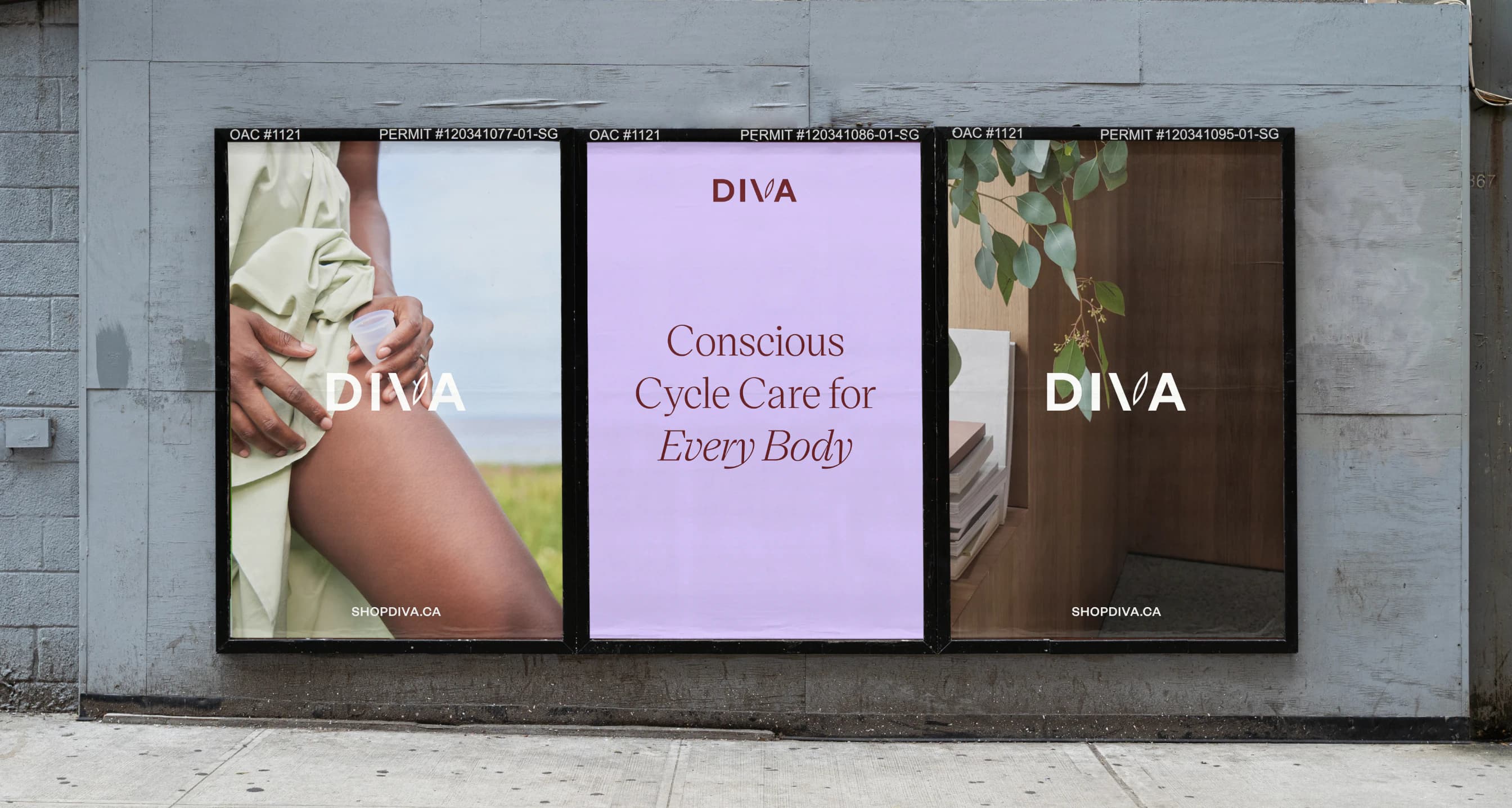
DIVA is the rebrand we point to inside our own work. Nicolas led that strategy as Head of Strategy, North America. DivaCup was a product name doing a brand's job. The work took it to DIVA, positioned as the conscious cycle care partner rather than a single cup. Several separate e-commerce sites consolidated into one. Sales rose more than 150 percent following the relaunch.
What made it a rebrand and not a refresh is what moved underneath. The physical product did not change. The category the business was allowed to compete in did, and the positioning had to catch up before any of the visual work could ship.
How to tell which one you need
Most people think they need a rebrand when what they actually need is a refresh. Boredom is not a strategic reason to reopen the foundation of a brand. In the teams we speak to the reverse is more common: they scope a refresh over a positioning problem. A refresh is the version leadership approves without a longer conversation.
Every engagement we take on opens with a diagnostic, and the diagnostic asks three questions in order.
Does the positioning still hold at the size the business is now? If it does, the work is expression and the scope is a brand refresh. If it does not, is the positioning actually wrong, or just unwritten? A positioning nobody committed to paper fails the same way a wrong one does, and it costs far less to fix.
Then: what is the business going to do next that the brand has to survive? A funding round, a new market, a founder stepping back. The scope is sized to that decision, not to the deliverable somebody already named. Same discipline as the five questions we ask before we quote.
The cost of picking wrong
A refresh scoped over a broken position buys eighteen months of quiet. Then the same meeting happens again, with less budget and less patience.
A rebrand scoped out of boredom spends recognition the brand took years to earn, on a problem the audience never had.
The number that decides this is not the price of either project. It is the cost of running the wrong one and then having to run the right one afterward.
Origine is a brand strategy studio built to hold the whole line, from the diagnosis through to the work that ships. If the brand sits between refresh and rebrand and the room cannot agree which, that is where the conversation starts.